CNML Question Bank
Pass your Certified Nurse Manager and Leader (CNML) exam on the first try.
- Study what's actually on the exam. Every question is mapped to the official AONL CNML blueprint, written in exam-style single-best-answer format, and validated by our nursing and physician faculty.
- Built for busy nurses with short practice sessions, a personalized day-by-day study planner, and a mobile-responsive platform that fits your schedule: On your break, your commute, or anywhere in between.
- Walk in confident with four timed simulation exams and analytics that show exactly where you stand before exam day, and all plans are backed by our .
No risk. Cancel within 7 days for a full refund for any reason.

“I found this platform incredibly helpful. The bookmark feature, hints during practice tests, and well-structured flashcards make studying much more effective and less stressful. It’s especially great for managing test anxiety, as it guides you to think through questions clearly. I only wish I had this when preparing for my CEN exam. I would definitely recommend it to other nurses pursuing board certifications.”
Amy Schaar, RN, CEN














Join a community of dedicated nursing professionals achieving certification and transforming patient care.
Questions in CNML Question Bank
CNML simulation exams that gauge exam readiness
Questions follow CNML blueprint
Avg pass rate for those who complete the whole course
Exam Sections Covered in BoardCerts
CNML Question Bank
Comprehensive coverage of all exam domains with detailed topic breakdowns to ensure your success.
Communication and Relationship Building (25%)
A. Relationship Management
- Develops relationships across the care continuum to build alliances and partnerships and achieve common goals.
- Manages conflicts and disagreements in a constructive manner.
- Identifies the internal and external relationships that impact the work of the department/unit to achieve department/unit goals.
- Interprets organizational and strategic realities (e.g., labor costs, different models of care delivery, key performance indicators (KPI), supply chain disruption etc.) to navigate changes.
- Recognizes the impact on staff of the organization's decisions and takes appropriate action.
B. Effective Communication
- Communicates with clarity and integrity to build trust with all stakeholders.
- Identifies and understands different communication styles.
- Utilizes appropriate communication style when engaging different audiences.
- Practices transparency and honesty to demonstrate authenticity.
- Builds trust by listening to and engaging staff and others.
C. Influencing Behaviors
- Exchanges ideas to gain cooperation from others to accomplish goals.
- Uses information from multiple sources (e.g., evidence from research, data, reports) to gain consensus and commitment from stakeholders.
- Coaches staff in their development (e.g., conflict management, active listening, communication, etc.).
- Create policies and initiatives to influence desired departmental behaviors.
Health Care Environment & Clinical Principles (18%)
A. Nursing Practice and Application
- Assists with the development of care delivery models and environmental design to ensure the delivery of safe patient care that is evidence-based, accessible, affordable, and equitable.
- Recognizes the impact of internal and external factors on care delivery and departmental/unit finances.
- Integrates patient quality and safety measures into the care environment.
- Formulates objectives and priorities to implement plans of care delivery consistent with long-term interests of the department/unit.
B. Economics and Policy
- Supports alignment of the department with organizational strategies and with current developments in healthcare economics, policy and legislation.
- Maintains knowledge of population health.
- Influences health care policy through advocacy at various levels of government, as it affects safety, quality, accessibility and affordability of health care.
C. Regulation
- Maintains knowledge of regulatory and accreditation standard/rule changes.
- Seeks resources in support of their department/unit's compliance regarding regulatory requirements.
- Ensures compliance with accreditation standards and local, state, and federal regulatory standards.
- Participates with response to identified deficiencies.
D. Evidence Based Practice
- Evaluates current department/unit practices to determine strengths and barriers in implementing evidence-based practices.
- Promotes integration of evidence-based research into practice at the unit level.
- Supports staff by providing resources for implementation of evidence-based practices.
E. Patient Safety and Quality
- Maintains knowledge of patient safety and improvement sciences.
- Ensures the incorporation of patient safety and improvement sciences with department/unit's practices.
- Participates in risk assessment (e.g., FMEA, root cause analysis, etc.) to ensure safe, compliant and effective care delivery.
- Implements processes that result in prompt escalation of potential performance gaps by utilizing system processes and staff at the unit level.
Leadership (25%)
A. Systems and Complex Adaptive Thinking
- Builds a shared vision that articulates and influences others to translate vision into action.
- Develops new insights into situations by questioning conventional approaches.
- Encourages staff to develop new and innovative ideas.
- Removes barriers to help implement new cutting-edge programs/processes.
- Creates and executes strategies for complex situations (e.g., addressing safety issues with workload capacity, increase nursing time at bedside, reducing hospital acquired conditions (HACs), etc.).
- Participates in nursing and organizational strategy planning and execution.
B. Change Management
- Acts as a catalyst for change by seeking new information and ideas.
- Adapts to new information, changing conditions and unexpected obstacles.
- Assesses through analytics (e.g., gap analysis, swot, etc.) if change is necessary.
- Utilizes common change models (e.g., KOTTER, LEWIN) and other tools for change (e.g., PDSA, LEAN methods).
- Supports staff in managing departmental changes.
C. Diversity, Equity, Belonging and Inclusion
- Recognizes unconscious and systemic bias occurs in care delivery, business operations, and through external influences.
- Leads and supports initiatives that address racism, discrimination and bias in care delivery and business operations.
- Encourages creative tension and differences of opinions.
- Fosters an inclusive workplace where diversity and individual differences are valued and maximized to achieve the vision and mission of the organization.
- Develops the ability of others to perform and contribute to the achievement of their goals consistent with the organization's vision and mission corresponding with individual needs.
- Provides feedback and opportunities for others to learn through formal and informal methods corresponding with individual needs.
- Creates, promotes, and protects a culture that supports staff, patients/clients and stakeholders.
D. Decision Making
- Seizes opportunities and takes calculated risks to advance department/unit's mission and vision.
- Identifies and objectively analyzes department/unit's problems and issues.
- Evaluates availability, relevance and accuracy of information.
- Generates and evaluates alternative solutions.
- Makes decisions that impact department/unit operations and incorporates an understanding of the impact and implications of their decisions.
- Makes timely, equitable, and appropriate decisions when data is available and when it is limited.
- Delegates responsibilities based on scope of practice, education, appropriate competence, and experience.
- Fosters professional governance in philosophy, structure and implementation.
- Empowers team to make independent decisions that affect their practice.
E. Transformation and Innovation
- Encourages the use of organization's framework on advancing innovation.
- Allocates resources for the development of innovation teams or methods.
- Supports the implementation of innovative ideas.
Professionalism (14%)
A. Professional Accountability
- Upholds professional ethical principles in decision making through personal, department/unit and staff accountability.
- Supports, promotes and role models standards of nursing and leadership professional practice (clinical, educational, certification and leadership) for colleagues and constituents.
- Solicits feedback from trusted sources about personal strengths and opportunities for improvement and incorporates the information into practice.
- Maintains competency through nationally recognized leadership certification.
- Participates in professional organizations that advance one's leadership practice and career development.
- Encourages staff to engage in their career development.
B. Organizational Accountability
- Aligns behavior with personal values and determines fit with the organization's culture.
- Ensures the voice of the patient is central and present in decision-making.
- Ensures a culture of accountability by holding self and others accountable for measurable high quality and cost effective outcomes.
- Follows up regularly with staff to ensure that desired outcomes are being achieved.
- Recognizes career opportunities for staff based on strengths and interests.
- Exhibits leadership presence (e.g., attending team meetings, vocal, fostering discussions, lead rounds, etc.).
C. Health Equity and Social Determinants of Health
- Reviews organization's needs assessment to identify current health equity issues.
- Creates action plan to see how to close the gap on department/unit health equity issues.
- Provides staff with tools and resources to provide culturally competent care (e.g., translation resources, discharge materials, appropriate referrals).
- Supports staff in participation of community-based activities that address community care.
- Coordinates and facilitates orientation related to culturally competent care.
- Evaluates culturally competent care through performance appraisals.
- Monitors performance data to ensure the delivery of culturally competent care.
D. Governance
- Interacts with and educates the organization's governing body regarding health care and the value of nursing as directed by senior leadership.
- Interacts and educates the organization's governing body regarding quality and patient safety principles as directed by senior leadership.
- Articulates the governing body's (e.g., Board) role in how the organization's mission is achieved.
- Assists leadership in preparing reports for the Board.
Business Skills and Principles (18%)
A. Financial Management
- Manages department budget by understanding and utilizing organization's financial processes.
- Maintains knowledge of reimbursement models that affect care delivery.
- Maintains knowledge of healthcare economics and business models to set priorities and measurable goals.
- Participates in creation of department budget.
- Manages department budget (e.g., allocation of resources, staffing, supply chain management, etc.)
- Monitors department budget to ensure accuracy of expenses and identify variances.
- Makes adjustment of budget as indicated by variances.
- Supports financial health as it is influenced by nursing and other clinical decisions and outcomes.
B. Strategic Management
- Communicates to staff high reliability concepts (e.g., safety huddles, use of evidence, deferring to expertise, etc.) as identified by the organization.
- Utilizes multiple sources of evidence-based data in goal setting and decision-making.
- Ensures departmental objectives are in place to achieve the strategic mission.
- Participates in the negotiation, monitoring and management of contract and service agreements.
- Aligns and creates nursing/clinical objectives, goals and tactics required to achieve the organization's strategic outcomes.
- Recognizes and supports the benefit and impact of technology on care delivery, clinical information, and financial outcomes.
- Uses evidence-based metrics to align department/unit's goals and objectives with patient outcomes.
C. Human Resource Management
- Builds and manages a diverse workforce based on organizational, professional nursing, clinical goals and outcomes, data, budget considerations, and staffing needs.
- Ensures that employees are recruited, selected, on boarded, educated, evaluated, and recognized according to established standards, applicable employment laws, and the organization's mission vision and values.
- Manages a multisector workforce and a variety of work situations.
- Assesses the unit's culture to ensure the presence of a safe and healthy work environment.
- Addresses any gaps associated with the cultural assessment of a safe and healthy work environment.
- Advances organizational policies that allow employees to practice at the top of education and or license.
- Establishes mechanisms that provide for identification and mentoring of staff for career progression.









Explore exclusive tools and insights tailored to help you ace the exam.

Interactive Practice Questions
Test your knowledge with free, exam-style practice questions designed to sharpen your skills.

Comprehensive Exam Information
Stay informed with detailed guidance on exam formats, eligibility criteria, and study tips.

Resources and Preparation
Access CNML information covering essential topics and strategies to excel on the exam.
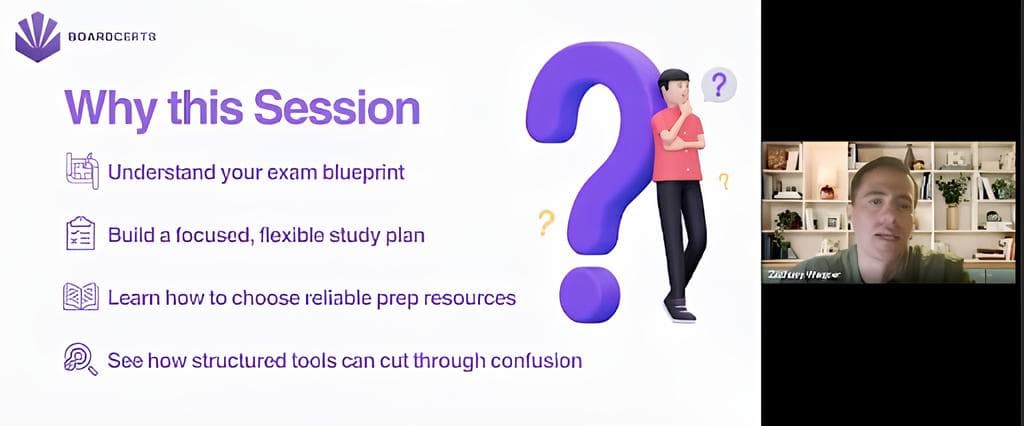
Learn how to pass your board certification exam. In 30 minutes we’ll cover what matters most and how to study smarter.
In this session:
- Step-by-step 4-8 week study plan
- High-yield topics and common pitfalls
- Live demo of the Question Bank and Simulation Exams
- Quick tips for test day confidence
Includes live Q&A. Can’t attend? Register and we’ll email the recording, slides, and a study checklist.
Who Pass the First Time With BoardCerts
No risk. Cancel within 7 days for a full refund.
CNML Question Bank
What's included
CNML Question Bank
What's included
No risk. Cancel within 7 days for a full refund.
What nurses are saying about BoardCerts
Reviews from nurses across our community (designation and platform shown when provided).

Brian David
NPD-BC
"Hi, my name is Brian. I used BoardCerts to prepare for the Nursing Professional Development Board certification (or the NPD-BC exam), and I'm excited to say that I passed on my first attempt. When I started preparing, one of my biggest challenges was figuring out exactly what I needed to focus on. There are so many different topics on the NPD-BC exam, from leadership and change theories to education, evidence-based practice, and professional development, and it can feel overwhelming trying to study everything, too. And I tried several different resources while preparing, including review courses and other practice question banks, but BoardCerts really stood out, because the questions helped me apply what I was learning instead of just memorizing information. The quality rationales also guided my remediation process and ultimately helped me understand the test content on another level. I found that the question level difficulty was also comparable to the actual exam, which helped ease some of my anxiety during the test. What I enjoyed most was being able to practice questions consistently, identify areas where I needed more review, and become more comfortable with how concepts could be presented on the exam. I also loved how there were several simulation exams to help me find my knowledge gaps which helped tailor my study sessions; and by the time I took my NPD-BC, I felt much more confident walking into the testing center. BoardCerts was definitely a valuable part of my preparation and I'd recommend it to anyone getting ready for their NPD-BC exam. Thank you."

Cherlita Gallardo
PMH-BC, GERO-BC
"Hi everyone, my name is Grace, and I'm proud to say that I am now a double board-certified nurse. I passed the PMH-BC and GERO-BC. Let me tell you something: taking the PMH-BC exam was one of the hardest certification exams I've ever taken. It was definitely not easy. A friend recommended the BoardCerts app to me, so I decided to subscribe for 3 months to help me prepare for the exam. Honestly, the practice exams were challenging. The difficulty level was comparable to the actual exam, and the practice exam is almost the same as the actual exam. It is very long, but it helped me prepare for what to expect on the exam day. At first, I was disappointed because I kept getting low scores on most of the exams I took. There were moments that I doubted myself and wondered if I was ready, but I reminded myself that practice is part of the process and low scores don't define your ability to pass. I kept studying, learning from my mistakes, and pushing myself to improve, and guess what? I passed! So thanks to the BoardCerts app platform, I am finally and officially PMH-BC and GERO-BC certified. If you are a nurse preparing for your board certification, my advice is to keep going. Trust yourself and don't let your practice scores define you or discourage you from taking your exam. I am telling you, please subscribe to the Board Cert app; it will surely help you. Thank you so much, Board Cert! You are part of my success and preparation journey. Your resources helped me get ready for this challenging exam. Thank you all, bye!"
Cherlita Gallardo
PMH-BC, GERO-BC

Megan Viduya
CDCES
"Hi, my name is Megan. I'm a registered nurse and I'm a newly minted CDCES— that's a Certified Diabetes Care and Education Specialist— and I can thank my passing score largely in part to BoardCerts. I found them really helpful during my study journey. A lot of really cool features on their website, the first being their simulation exam. So I took one simulation exam at the very beginning to just really get a baseline of knowledge that I was comfortable with and knowledge that I wasn't. So after taking that initial exam, I then referenced the question bank within the BoardCerts platform and was able to select topics that I was not comfortable with, so that I could get more exposure to said topics and really hone in my knowledge to then pass the exam. I really liked that you could turn on either tutor mode or exam mode. I really liked the tutor mode personally because it allowed me to get real-time feedback after answering each individual question, and it was also really cool that it had AI technology looped into it as well to then break down what you answered incorrectly and how you could study that topic further. I really appreciated the study plan option that BoardCerts recommended to plan out my week and best prepare for the exam. Overall, so thankful that I used BoardCerts, and they offer a lot of information and a lot of tools to help me succeed."
Kymm Ehler
NE-BC
"As I prepared to study for the NE-BC exam, my plan had been to use the exam break down and reference list from ANCC to create my own study guide. Yes, a very lofty goal! As I sat and pondered how I was going to tackle gathering all of the information, I decided that there was probably something out there to help me prepare. I did an internet search and found BoardCerts. After investigating and reading reviews, I decided BoardCerts was the best choice for me. BoardCerts provided questions for each of the categories covered on the NE-BC exam and also practice tests that compiled random questions from each of the categories. I appreciated the structured learning plan. I also liked seeing areas where I did well, and areas where I needed to learn more. It was easy to use and I actually looked forward to studying each night. My original plan had been to study for about 5 months and take the exam month 6. With the help of BoardCert, and my structured daily study plan, I was prepared to take the exam after about 8 weeks. Walking into the exam, although a nervous wreck, I felt prepared. I walked out a nervous wreck until I got in my car, checked my email, and found a "Congratulations, you passed!" waiting for me! BoardCert was definitely part of my success. I would recommend BoardCert as a study resource when preparing to take the NE-BC."

Sydney Petri
MSW, LICSW, APHSW-C
"Hi there, my name is Sydney. I am now an Advanced Palliative and Hospice Care social worker certified, thanks to BoardCerts. When I started researching ways to study, the most difficult thing for me was finding example questions to see how the test was laid out. The practice tests and question banks were definitely the most helpful resources. After answering those questions, it laid out which sections and components of the exam I needed to focus on. From there, I was able to use the flashcards to really hone in on those specific competencies. I found BoardCerts by doing research, and it had a lot of really great reviews. I ended up passing my exam on my first try after about a month of studying. BoardCerts was pretty much the only resource I used, and it was extremely helpful. I would highly recommend it to anybody.<h>"
Frequently
asked questions
Your questions answered - all you need to know to prepare and pass the CNML exam.
Our CNML Question Bank offers expertly designed 1,200+ practice questions, detailed explanations, and references tailored to the CNML exam blueprint, ensuring a thorough and confidence-boosting preparation experience.