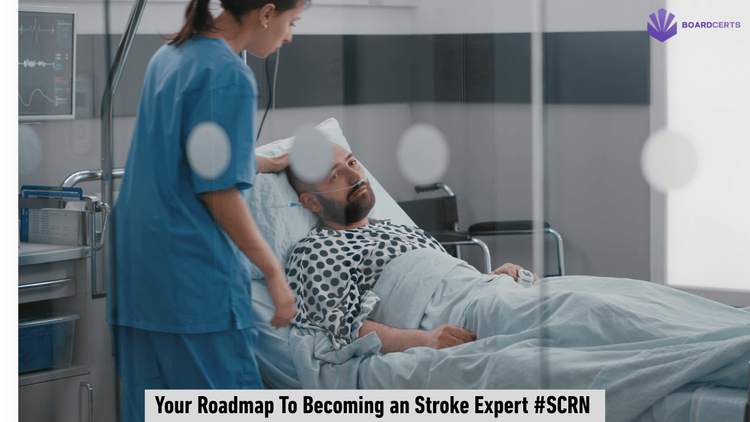
Your Guide to Passing the SCRN Certification Exam
Your Guide to Passing the SCRN Certification Exam
Earning the designation of Stroke Certified Registered Nurse (SCRN) is a momentous step that confirms your specialized skill and deep commitment to the field of neuroscience nursing. This credential, issued by the American Board of Neuroscience Nursing (ABNN), is a recognized benchmark of excellence. It signifies that your knowledge base meets the rigorous national standards required to provide optimal, evidence-based care across the full continuum of stroke management.
This guide provides a roadmap for your SCRN journey, covering the immense value of certification, the core knowledge required, and the proven study strategies that will lead you to success.
1. The Value Proposition: Why Pursue SCRN Certification?
Your decision to seek the SCRN certification reflects a dedication to professional mastery and patient advocacy. In the high-stakes environment of stroke care, this credential translates directly into enhanced career opportunities and better clinical outcomes.
Professional and Financial Benefits
The SCRN certification immediately sets you apart as a stroke expert. It moves you beyond general nursing competency into a specialized realm, bringing with it several professional and financial advantages:
| Category | Impact Of Certification |
|---|---|
Career Mobility | Preferred candidate for roles in stroke centers, leadership, education, and quality improvement. |
Financial Reward | Eligibility for pay differentials, bonuses, or employer-covered certification and renewal fees. |
Professional Respect | Recognized as a subject matter expert by multidisciplinary team members and administrators. |
Credential Validity | Formal validation that your knowledge aligns with national best practices. |
Impact on Clinical Excellence
The primary benefit of achieving the Stroke Certified Registered Nurse status is the impact on patient safety and quality of care. The preparation required for the exam forces you to internalize the most current, evidence-based protocols.
- Adherence to Guidelines: Certification preparation ensures you are fluent in the latest American Heart Association/American Stroke Association (AHA/ASA) guidelines for time-critical interventions like thrombolysis and mechanical thrombectomy. This expertise reduces variability in care and promotes compliance with crucial quality metrics.
- Improved Patient Outcomes: Specialized knowledge in domains such as secondary prevention, complication management (e.g., dysphagia screening, VTE prophylaxis), and early rehabilitation planning leads to fewer preventable complications and faster, more complete functional recovery for stroke survivors.
2. Navigating the Official Exam: The ABNN Requirements
Your preparation must be grounded in the official structure and requirements set forth by the certifying body. The SCRN certification exam is administered by the American Board of Neuroscience Nursing (ABNN) and is designed to be challenging, reflecting the complexity of the specialty.
SCRN Eligibility and Exam Overview
To sit for the SCRN exam, you must meet stringent eligibility criteria designed to ensure candidates have foundational clinical experience.
| Detail | Required |
|---|---|
Licensure | Current, active, and unrestricted Registered Nurse (RN) license in the U.S. or its territories. |
Experience | Minimum of one year (2,080 hours) of direct or indirect professional nursing practice in stroke care within the last three years. |
The exam itself is a structured, timed assessment of your clinical knowledge application:
| Exam Metric | Specification |
|---|---|
Format | 170 multiple-choice questions (150 scored + 20 unscored pre-test items). |
Duration | 3 hours (180 minutes). |
Passing Score | A scaled score of 200 is required for certification. |
For the most precise and up-to-date information regarding fees, scheduling through PSI (the testing administrator), and detailed policies, always consult the official ABNN SCRN Certification Information website.
3. Mastering the SCRN Content Blueprint
The SCRN exam is deliberately structured to test your knowledge across the entire continuum of stroke care, not just the acute phase. To study effectively, you must strategically focus your time based on the five major knowledge domains outlined by the ABNN.
Your study plan must equally address these five areas. Neglecting domains like rehabilitation or prevention in favor of just hyperacute care is a common mistake that leads to failing the exam.
| Domain Focus | Key Concepts Tested |
|---|---|
I. Anatomy, Physiology, and Pathophysiology of Stroke | Vascular Anatomy, Brain Structure, Stroke Types, Stroke Syndromes, Associated Stroke Disorders (e.g., etiology), Stroke Mimics, Neuroplasticity, Cellular Composition and Changes (e.g., penumbra) |
II. Hyperacute Care | Initial triage, Assessments, Diagnostic Tests, Treatment Considerations, Thrombolytic Therapy, Hemorrhagic Interventions, Ischemic Interventions, Advanced Interventions (e.g., thrombectomy, surgical), Complication Management and Education, Medications, Quality Stroke Metrics (e.g., door to needle), Patient Disposition |
III. Acute Care | Assessment and Diagnostic Tests, Hemorrhagic Interventions, Ischemic Interventions, Complication Management, Multidisciplinary Plan of Care, Safety Measures, Individualized Care for Activities of Daily Living, Therapeutic Environment (e.g., sensory, positioning), Psychosocial Care, Education, Quality Stroke Metrics, Medications, Early Rehabilitation and Discharge Planning |
IV. Post-Acute Care | Multidisciplinary Plan of Care, Goals of Rehabilitation, Levels of Rehabilitative Care, Rehabilitation Considerations (e.g., spasticity, safety, Stroke Education, Medication Management, Community Resources (e.g., support groups) |
V. Primary and Secondary Preventative Care | Comorbidities and Stroke Risk Factors, Prevention Measures and Social Determinants of Health, Diagnostic Tests (e.g., imaging, lab work), Medication Education and Management, Quality Stroke Metrics (e.g., patient education), Community Health Education |
4. Developing an Expert-Level Study Strategy
Certification is achieved through effective preparation, not simply through clinical experience. The most successful candidates employ proven, evidence-based study methods.
Structured Timeline and Resource Selection
A dedicated study period of 2 to 3 months is generally recommended. Begin by collecting authoritative resources that directly align with the ABNN blueprint:
- Core Curriculum: Resources like the BoardCerts Question Bank or similar faculty-reviewed, specialized texts are excellent for exam review.
- Guidelines: Study the current AHA/ASA guidelines. Many exam questions are based on the application of these official clinical recommendations.
- Practice Tests: High-quality practice exams are indispensable. They train your endurance, reveal your knowledge gaps, and familiarize you with the complex question format (often scenario-based vignettes) used on the actual certification test. Consistent practice testing is the single most important diagnostic tool you have.
Leveraging Community Experience
It is helpful to ground your strategy in the experience of those who have already passed. Community discussions, such as those found on professional nursing forums like Reddit, often highlight the most effective approach. For example, many nurses preparing for the SCRN certification consistently advise using targeted study materials rather than overwhelming general textbooks. Their consensus is clear: Focus on the application of critical guidelines and use timed practice tests to simulate the pressure and content of the real exam.
Advanced Learning Techniques
Move beyond passive reading by incorporating active learning strategies:
- Active Recall: Test yourself constantly. Use flashcards, mind maps, or simply cover up your notes and speak the key concepts aloud. This forces your brain to retrieve the information, which strengthens memory retention more effectively than simply reading.
- Spaced Repetition: Review material at increasing intervals over time. For critical, easily forgotten details (like specific blood pressure parameters or drug dosages), this technique is crucial for transferring information from short-term to long-term memory.
- Content Chunking: Break large domains into smaller, manageable "chunks." For instance, master the assessment tools (NIHSS, GCS) before moving on to the intervention protocols (tPA criteria, thrombectomy indications).
5. Finalizing Preparation and Conquering Test Day
As your exam date approaches, your focus should shift from learning new material to refining and synthesizing your knowledge.
The Final Four Weeks: Synthesis and Review
- Weeks 1-2: Focus on targeted remediation. Use your practice test scores to identify your weakest domains and dedicate extra study time to those specific areas. Review the rationales for every practice question you missed.
- Weeks 3-4: Take a final, full-length, timed practice exam. Treat the score as your final readiness check. Your goal is to score comfortably above the passing threshold. During the last week, switch to light, passive review. Only look at summaries, flashcards, and notes. Avoid cramming new content.
- The Day Before: Rest. Reviewing your most critical notes (like the tPA inclusion/exclusion criteria) for 30 minutes is fine, but do not engage in intense study. Ensure all necessary documents (ID, authorization) are prepared.
Test Day Protocol
Approach the exam with confidence and a clear plan.
- Trust Your Prep: Remember the hundreds of hours you've invested. Your practice scores reflect your competence.
- Time Management: With roughly one minute per question, do not let yourself get stuck. If a question is highly challenging, use your strategy to eliminate obvious incorrect choices, make an educated guess, flag it, and move on. You can return to flagged questions if time allows.
- Read Carefully: Many errors result from misinterpreting the clinical scenario. Pay close attention to keywords like "initial nursing action," "contraindication," or "best intervention."
Conclusion
The SCRN certification is a testament to your professional maturity and expertise as a Stroke Certified Registered Nurse. By following this authoritative guide, aligning your study with the ABNN's blueprint, and employing disciplined study tactics, you are ensuring you are maximally prepared to demonstrate the specialized knowledge required.
Embrace the challenge, trust your training, and prepare with trusted tools like BoardCerts to achieve this significant professional milestone.